Where cases only close when justice is served
The Sunshine State. Warm waves. White sand. The kind of place people come to start over — to disappear into something better. But some people disappear here and never come back. And the sand keeps its secrets for a long time. Sometimes forever. Until now. There are names that haven't been spoken in decades. Cases that went cold before some of us were born. Files that gathered dust while the world moved on.
We don't move on.
This is Florida Unsolved.
Florida Unsolved is a Florida and IRS-recognized nonprofit. Every name. Every case. No expiration date.
St. Augustine, Florida — the nation’s oldest city and, as far as we know, home of Florida’s first unsolved cold case.
One hundred eighty-eight years before the brutal slaying of Athalia Ponsell Lindsley on the front steps of her Marine Street home, long before Frances Bemis left for her usual evening walk never to return (both cases unsolved to this day), there was the unsolved murder of Lieutenant Guillermo Delaney. Delaney was stabbed and beaten as he walked along a dark stretch of Charlotte Street late in the cool Northeast Florida night in the waning weeks of 1785. Delaney succumbed to his wounds in January of 1786, dying in the same month as Lindsley would many years later with his assailants never having been identified or brought to justice.
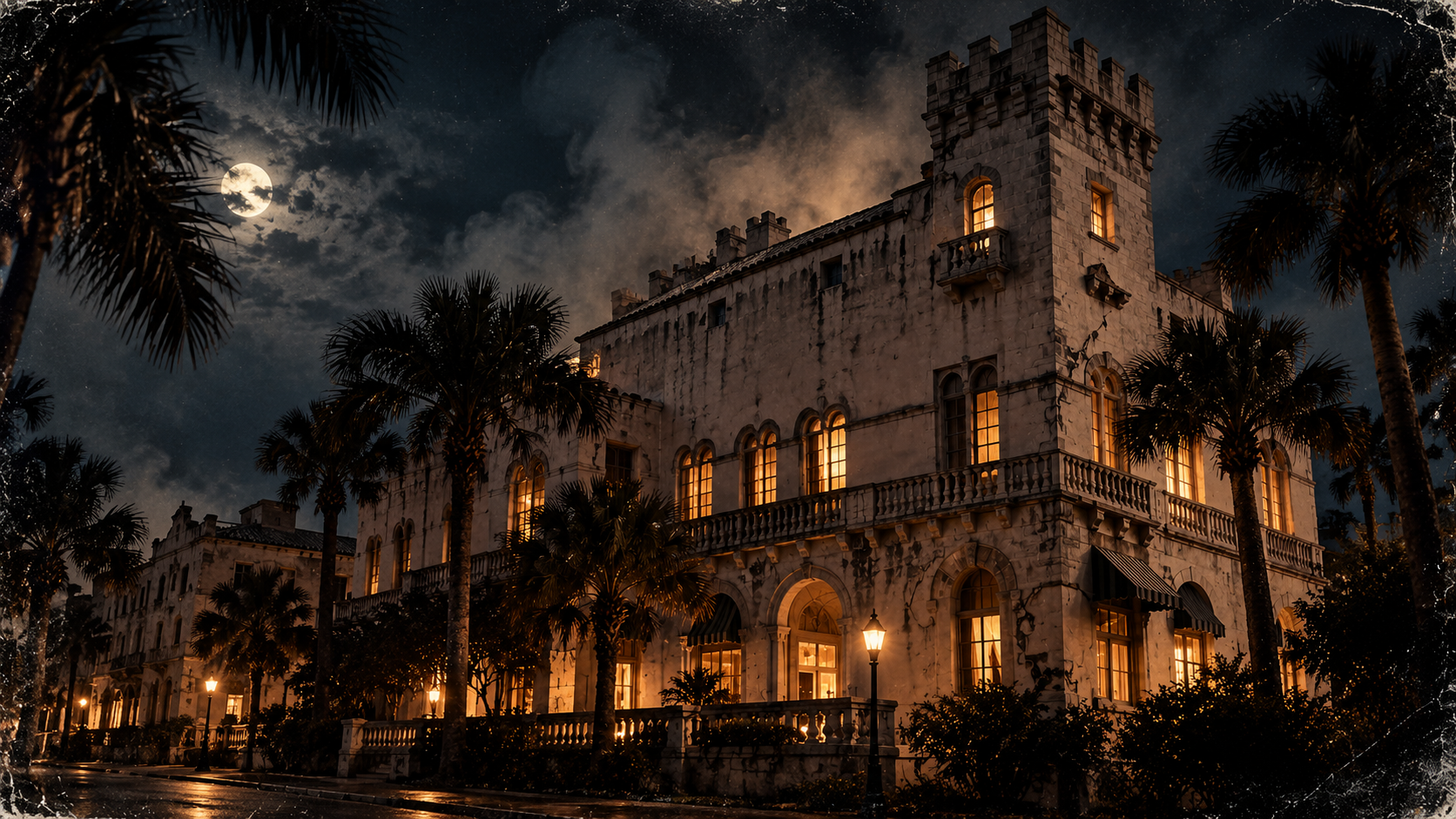
Ancient City in the Dark
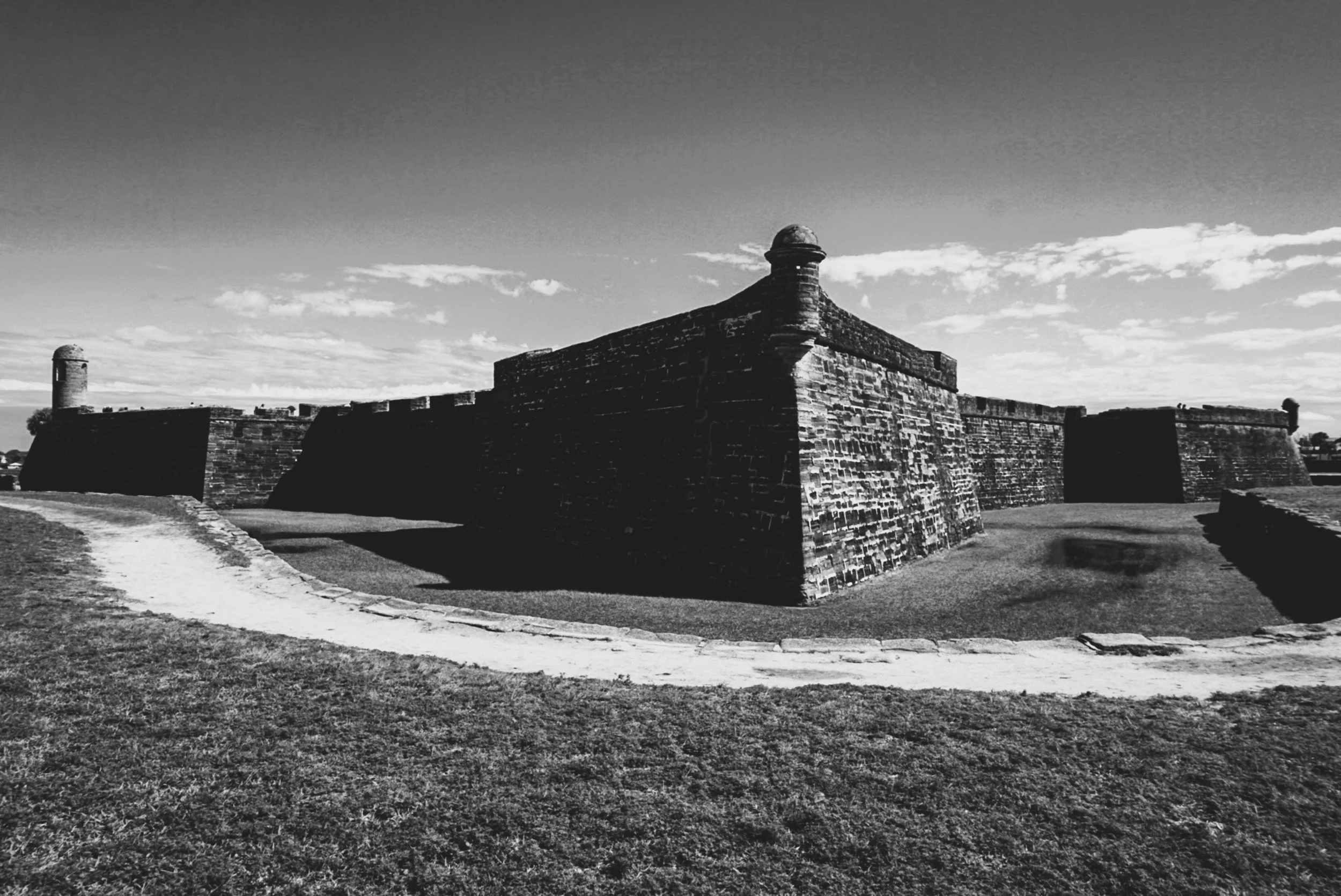
In November of 1785, East Florida was stabilizing post evacuation of around 10,000 British loyalists who had fled to the area during the period of the American Revolution. St. Augustine was, at the time, home to approximately 2,700 inhabitants with civilian population counting for less than 1000 of those. The majority were military personnel stationed at the Castillo de San Marcos along with their families. A garrison town, St. Augustine was then as it still is in many ways — insular, with everyone knowing everyone and everyone’s personal business being a matter of public discussion — in which daily life was structured by military rank.
Delaney, having served in a unit seeing much action during the Revolution, served as lieutenant in the Hibernia Regiment of Spain’s Irish Brigade. He was stationed at the Castillo de San Marcos by 1784, by all accounts a seasoned soldier continuing his tenure at a quiet post. But November 20, 1785 changed that.
Some time, between the hours of 9:30 to 10:00 that night, as Delaney was walking along Charlotte Street (at the time, known as San Carlos), a block north of current-day Treasury Street, he was attacked suddenly and without warning — stabbed and beaten by persons that he was unable to identify. Severely wounded, he made his way to the residence of one Josef Gomila to which he was already deliberately heading. This detail may be a significant clue.
Florida Unsolved, based in St. Augustine, takes on one of the Ancient City’s most infamous cold cases and is forced to grapple with a seemingly connected murder that time, history and true crime enthusiasts seem to have forgotten.
With documented cold cases dating back as far as the murder of Lieutenant Guillermo Delaney in 1785, St. Augustine, the nation’s oldest city, has no lack of murder, mystery, and intrigue. The most well-known of these is, no doubt, the (technically) unsolved murder of Athalia Ponsell Lindsley on January 23, 1974.
Lindsley lived on 124 Marine Street in St. Augustine, one of the city’s oldest and historically layered residential neighborhoods running along the Matanzas River waterfront. On January 23, 1974, a singular moment that would come to define St. Augustine’s cold case history — a former model, Broadway dancer, and TV personality was murdered on the front steps of her home, in plain daylight. And this wasn’t just a murder, it was a murder most gruesome. Lindsley was found nearly decapitated having been struck at least nine times by a machete. Virgil Stuart, Chief of Police at the time stated, “a crime of just pure hate…”
Her Name Is Laura
Laura left no goodbye. She left no trace — seemingly vanishing into thin air in America’s oldest city. What she left behind is a case full of unanswered questions and a family still waiting for someone to ask them out loud.
Laura Lynn Bryant was 44 years old at the time of her disappearance, listed as September 19, 2022 by both The Charley Project and NamUs while the SJSO has consistently referenced December 2022. She was 5 feet 4 inches tall, weighed 100 pounds, had brown hair and green eyes. By all accounts, she was well-liked with a close circle of friends and family. Beth Elrod, her sister, described her as having a “very bubbly, very shiny personality, was always just happy.”
The Disappearance
Mentioned above, the dates vary across sources complicating the case. There is a discrepancy of roughly three months. This discrepancy has of yet not been publicly addressed. She vanished sometime between September and December 2022.
Laura was living in St. Augustine, Florida at the time of her disappearance with a friend. The friend died (presently unidentified and cause of death unknown) around the time of Laura’s disappearance. Per Beth Elrod, the friend’s death — most particularly the funeral — was what triggered the family’s alarm as Laura didn’t show for the funeral.
The Discovery
Crescent Beach, April 10, 1985. Construction workers building a new beach walkover discovered human remains buried in a shallow grave. The victim, buried for years, was a white female estimated to have been between 30 and 50 years old at the time of death. Her death was ruled a homicide. For almost 40 years she was just one among many Jane Does.
The Face Without a Name
In 2011, the victim’s skull and mandible were sent to the Florida Institute for Forensic Anthropology and Applied Science at the University of South Florida. There, forensic experts were able to produce a facial reconstruction. While new leads are said to have surfaced, she would not get her name back for another 13 years.
In 2022, SJSO detectives attended training on cold case homicides in which forensic genetic genealogy was presented. They brought their newfound knowledge back to the Major Crimes Unit (MCU) and, after consulting with the Florida Department of Law Enforcement (FDLE), submitted portions of the remains to Othram, a Texas-based laboratory specializing in advanced DNA techniques. The lab was able to successfully extract a viable DNA profile. This sample was then processed against the consumer-facing genealogy databases, the results of which identified potential relatives.